
What is Chiropractic?
History of Chiropractic as a Medical Professsion
The birth of chiropractic came in 1886 by a man named Daniel David (D.D.) Palmer, who wanted to help those who were wary of Doctors in the medical profession. After nine years of experience and working on various theories, D.D. Palmer came to the conclusion that inflammation was the main characteristic of diseases. At the time, this was a completely new theory and was not known in the medical profession. His main technique was to use his fingers to pinpoint the inflammation and manually shift the parts of the body to remove the friction causing the inflammation, or swelling (Keating et al., 2004)
By the mid-1890's Palmer's theories had evolved. Based on the idea that inflammation ocurred when body framework was shifted, it rubbed against each other, thus causing friction and heat. However, when he manually moved the body parts with his hands, it prevented more friction and inflamed tissue from developing (Keating et al., 2004). This was the beginning of an alternative to regular medicine to help with various diseases and problems of the human body.
Wellness Living!!!
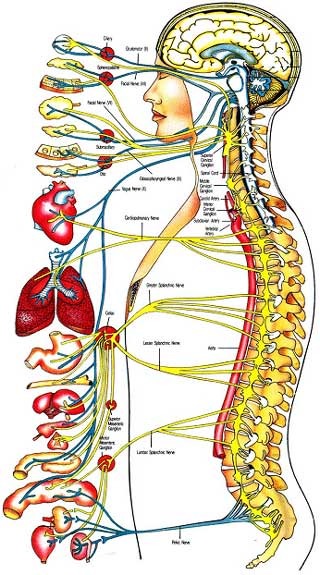
Over the years, scientific research and study have changed the field of chiropractic to what it is today! The main foundation behind chiropractic is that the body is a self-regulating and self-healing organisim in which the nervous system is the main system. It is the nervous system which regulates and controls all of our organs and tissues, relating to the patient and their particular environment.
A chiropractor's main focus is to correct, manage or minimize misalignment in the bones of the spine through an "adjustment" where they physically adjust the position of the bones with just the right amount of pressure so as not to damage the joints (Keating et al., 2004).
A chiropractic adjustment can correct the misaligned bones to their correct position, thus providing increased range of motion, reduced nerve irritability, reduced pain and improved function - all allowing the body to heal itself. When the body is working properly, it tends to heal effectively, no matter what the condition (Meek, 2011).
Chiropractic is NOT Just for the Back or Neck...
In many cases, chiropractors are treating musculoskeletal problems, whether they be from an accident, injury or fall.
However, if at any time along the way, a patient is having other troubles, like stomach problems or headaches -most people do not know chiropractic can help with this as well. chiropractors do not treat those specific problems, but if there is a hindrance at the spinal level (where the nerves come out and go to the affected organs) a lot of times an adjustment in that area can help alleviate the problems.
Ear infections are another example not normally thought of a chiropractic adjustment helping with, and although the chiropractor is not technically adjusting for an ear infection, a spinal manipulation to the neck (which controls that area) can oftentimes help (Loehr, 2011).

So if we are having symptoms or pain caused by some of these issues, why wouldn't we want to try chiropractic instead of having a procedure or surgery which might have been prevented, had we not masked the symptoms with medications or tried other therapies first?